
Product Overview
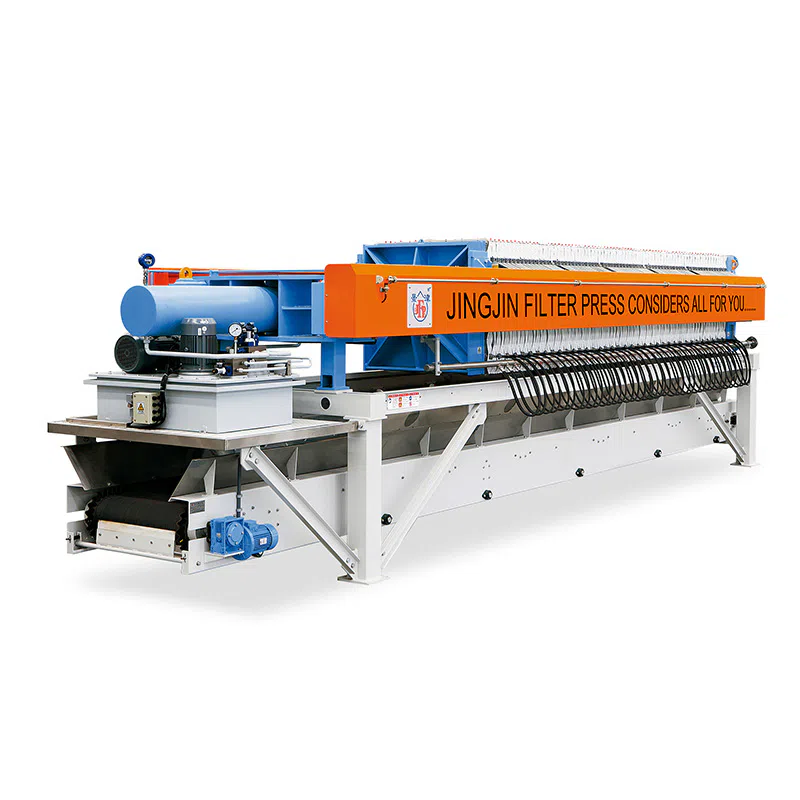
The Integrated Filter Press and Conveyor System combines a programmable automatic filter press with material handling equipment on a common steel structure. Designed for industrial solid-liquid separation applications, it connects slurry filtration, dewatering, filter cake discharge, and subsequent material transfer within a coordinated equipment arrangement.
In a conventional installation, discharged filter cakes may require separate collection and handling before being transported to the next processing stage. By positioning the conveying equipment directly in relation to the filter press discharge area, this integrated filter press system allows dewatered solids to be received and transferred with less intermediate handling.
During operation, the filter press performs its programmed filtration and discharge cycle, while the connected conveyor receives the released filter cakes and moves them toward the designated discharge point. This arrangement allows the intermittent filtration cycle to work in coordination with downstream conveying operations without requiring manual transfer between the two machines.
The conveying equipment can be adapted to different filter cake properties. Depending on material viscosity, flow behavior, and handling requirements, the system may incorporate a screw conveyor, light-duty belt conveyor, or heavy-duty belt conveyor. Custom configurations are available to accommodate site layouts and process requirements.
This filter press with conveyor arrangement is suitable for municipal environmental treatment, industrial wastewater processing, mining and aggregates, and new energy materials production. Final equipment selection should consider both filtration performance and the handling characteristics of the discharged solids.
System Integration
1. Common Steel Support Structure
A shared steel structure provides the mounting arrangement for the filter press and conveyor. Their relative positions are established according to the mechanical configuration and site layout.
2. Filtration and Discharge Interface
The automatic filter press performs solid-liquid separation and cake discharge. The interface with the conveyor is determined by the plate opening arrangement, discharge position, and available clearance.
3. Cake Collection and Transfer
The conveyor is positioned to receive discharged solids and transport them toward the designated handling or downstream processing area.
4. Equipment Operation Coordination
Operation of the filter press and conveyor can be coordinated according to the project control requirements. Start-stop sequences, interlocks, and the scope of the control system should be confirmed for the selected configuration.
Product Functions
1. Integrated Filter Press and Conveyor Design
The filter press and conveyor are highly integrated on a single steel frame, forming a compact and integrated system.
2. Flexible Conveying Configuration
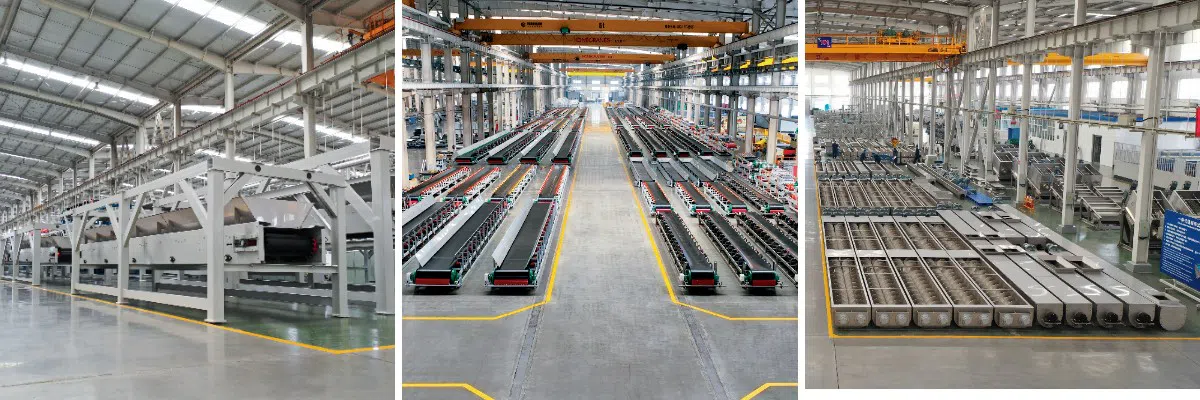
Different conveying systems, including screw conveyors, light-duty belt conveyors, and heavy-duty belt conveyors, can be configured according to the viscosity and flowability of different materials. Customization is also available for complex operating conditions.
Conveyor Options
1. Screw Conveyor
Uses a rotating screw to move solids along a defined conveying path. It may be considered for filter cakes with adhesive characteristics or applications requiring a contained material transfer route. Suitability depends on moisture content, consistency, and conveying distance.
2. Light-Duty Belt Conveyor
Can be considered for lighter conveying loads and materials that can be transported reliably on a moving belt. Conveyor sizing should reflect the actual discharge load and filter cake condition.
3. Heavy-Duty Belt Conveyor
Designed for applications requiring greater material handling capacity. Selection should account for cake weight, discharge impact, transfer distance, and operating conditions.
4. Customized Conveying Arrangements
The conveying layout can be adapted to the cake discharge height, transfer direction, material behavior, and location of downstream equipment.
Applications
1. Municipal Environmental Treatment
Suitable for sludge dewatering and filter cake transfer in municipal treatment operations. Dewatered solids can be conveyed toward designated collection or further treatment areas.
2. Industrial Wastewater Treatment
Can be used for filtration and handling of industrial sludge and other solid residues. Conveyor selection should account for sludge consistency, cake properties, and the intended disposal or processing route.
3. Mining and Aggregates Processing
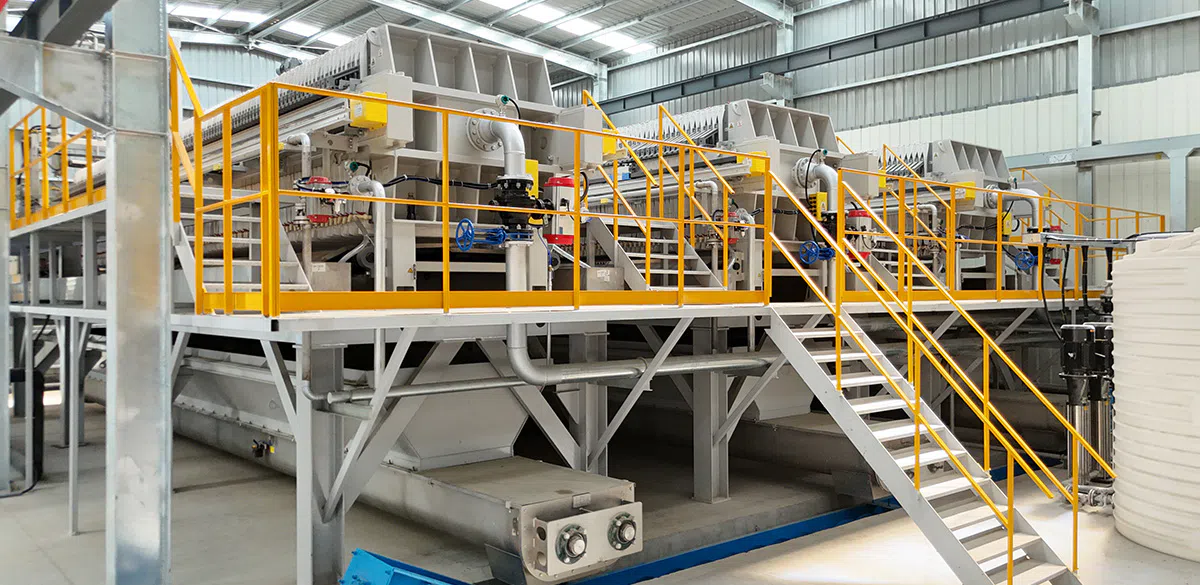
Applicable to solid-liquid separation and cake handling in mineral processing and aggregates production. The conveying arrangement should reflect material weight, particle characteristics, and handling loads.
4. New Energy and Advanced Materials
Supports filtration, dewatering, and cake transfer operations in relevant battery material and advanced materials processes. Conveying equipment is selected according to the discharged solids and subsequent processing requirements.
Engineering Selection
1. Evaluate Material Characteristics
Determine slurry concentration, particle properties, and filtration requirements. The moisture condition, adhesion, and flow behavior of the discharged filter cake should also be assessed before selecting a conveyor.
2. Specify the Filter Press
Select the programmable automatic filter press according to the required processing duty. Available plate models include 630, 800, 900, 1000, 1250, and 1500. Detailed filtration areas and configurations must be confirmed in the technical proposal.
3. Define Conveying Requirements
Identify the cake discharge position, conveying distance, transfer direction, receiving location, and expected material load to establish the appropriate conveyor arrangement.


