
Product Overview
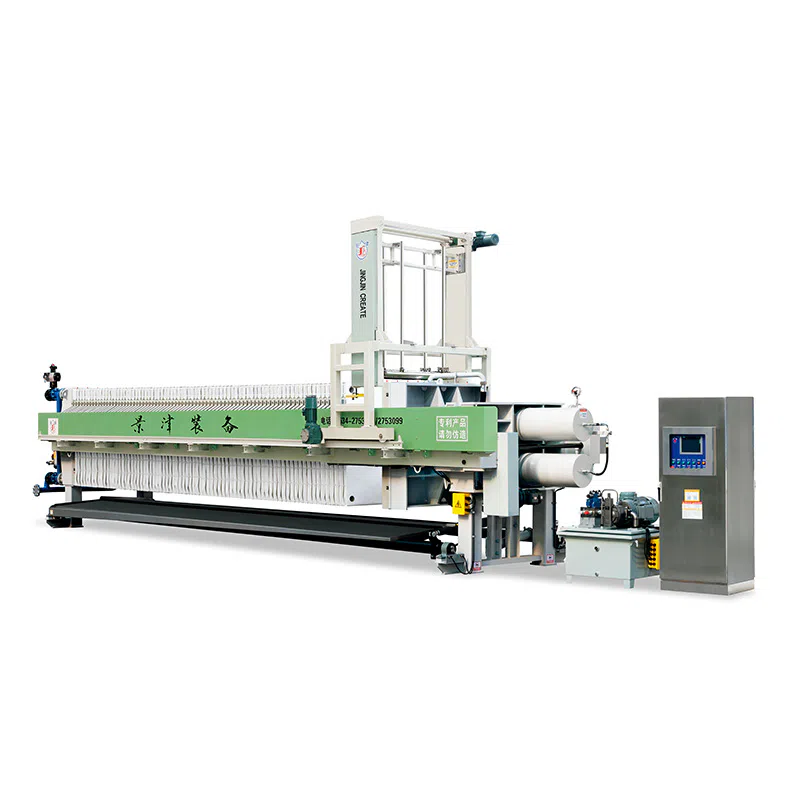
Filter Press combines filtration, cake washing and dewatering for processes that require cleaner solids, recovery of valuable constituents from liquid streams, or reduced washing water consumption. Available models include 500, 1000, 1250, 1500, 1600, 1500×2000 and 2000, with configuration selected according to filtration area and plate specification.
After cake formation, wash liquid passes through the solids layer to displace retained mother liquor. The machine can perform multistage countercurrent washing and automatically divert liquids into separate collection streams according to concentration.
Higher-concentration liquid returns to the production system for recovery of useful constituents. Lower-concentration liquid is reused in an earlier washing stage to make further use of the wash liquor. The number of stages, reuse arrangement and fresh water requirement should be established for the feed and washing endpoint, particularly in battery material and hydrometallurgical processes.
Displacement Cake Washing
Some mother liquor remains within the cake after filtration. Displacement washing passes wash liquid through the solids layer to carry this retained liquid out.
Washing performance depends on both liquid quantity and its distribution through the cake. If liquid follows easier flow paths, other regions may receive insufficient washing. Process design therefore needs to consider penetration, cake structure and the washing endpoint to limit ineffective water use caused by bypass.
Where product residues must be controlled, cake analysis and changes in the wash filtrate can be used to assess the result alongside washing time and volume.
Multistage Countercurrent Washing
Staged Washing
Washing is organized into stages so that liquor suitable for further use can serve an earlier stage. Stage numbers and liquid allocation should follow material trials and the process design.
Higher-Concentration Liquid Recovery
Higher-concentration liquid is collected separately and returned to production for further recovery of valuable constituents, avoiding unnecessary mixing with more dilute wash liquor.
Lower-Concentration Liquid Reuse
Lower-concentration liquid returns to an earlier washing stage for further displacement. Concentration ranges and reuse destinations should match the receiving requirements of the production process.
Models and Auxiliary Options
| Available Model |
|---|
| 500 |
| 1000 |
| 1250 |
| 1500 |
| 1600 |
| 1500×2000 |
| 2000 |
The press can be integrated with the following auxiliary systems:
Automatic drip trays;
Filter cloth washing equipment;
A gantry-mounted shaking system;
Cake handling and storage arrangements.
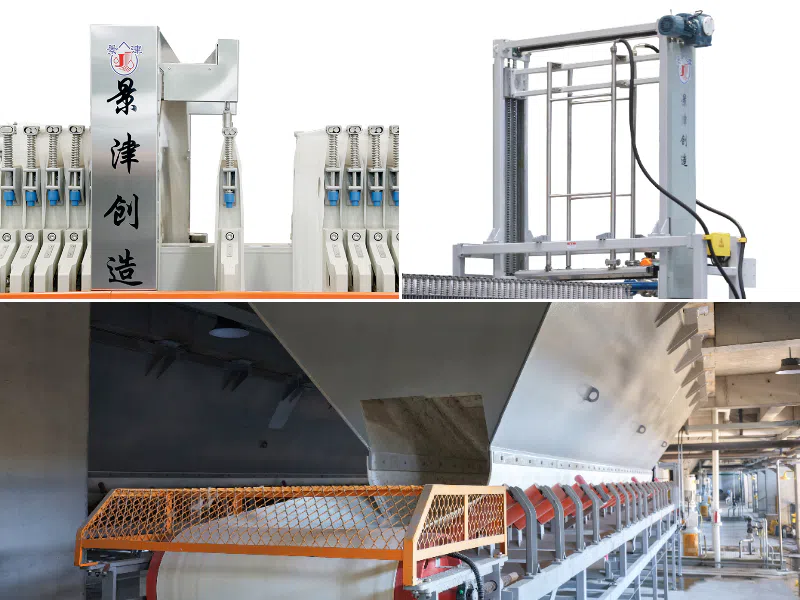
These are project-dependent options, selected for discharge, cloth maintenance and site material handling. Cake washing and cloth washing serve different purposes and require separate process specifications.
Applications and Process Requirements
Applications include filtration and washing in battery material production and hydrometallurgy. The listed materials are:
Iron phosphate;
Lithium carbonate;
Slurries from cobalt acid leaching;
Lithium manganate;
Rare earth concentrates.
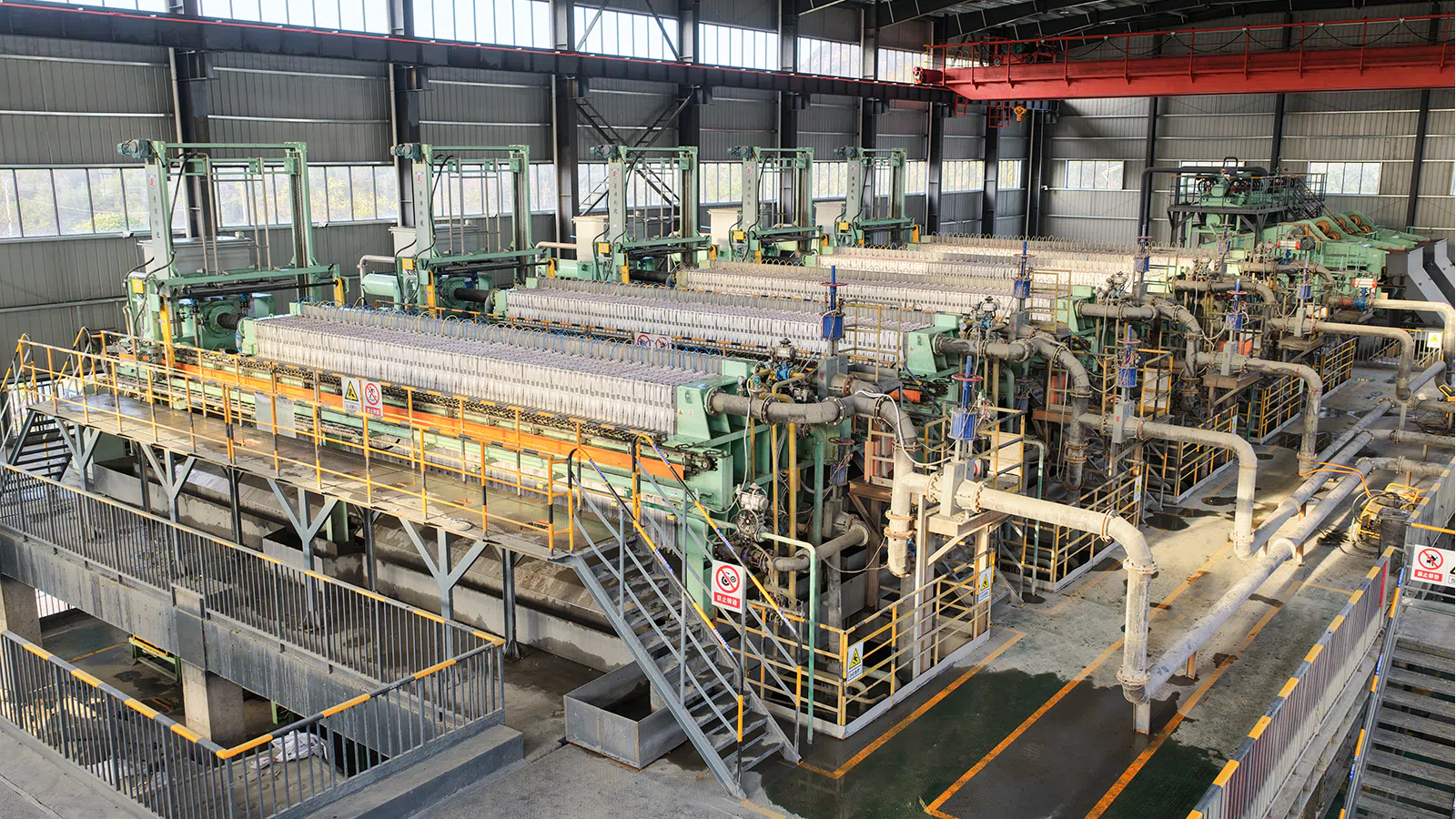
Process specifications should identify the mother liquor or soluble constituents to be removed, permitted cake residues, and the receiving requirements for concentrated recovery liquid and dilute reuse streams.
The washing arrangement also needs to suit filtration behaviour, cake thickness and wash liquid compatibility. Water savings and recovery performance should be assessed together with the washing result, so that reduced water consumption remains consistent with the product requirements.


