Product Overview
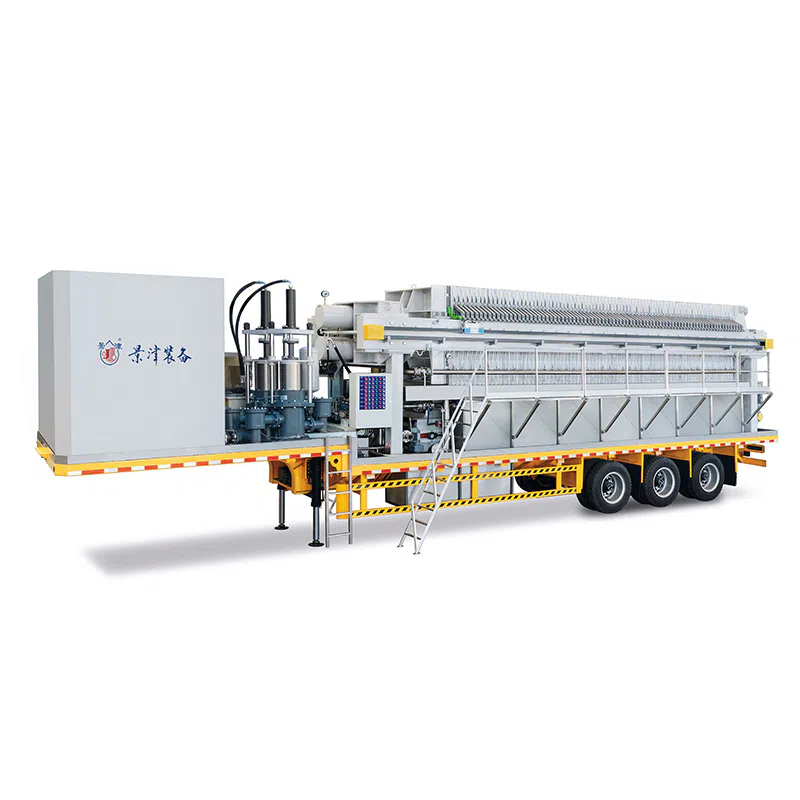
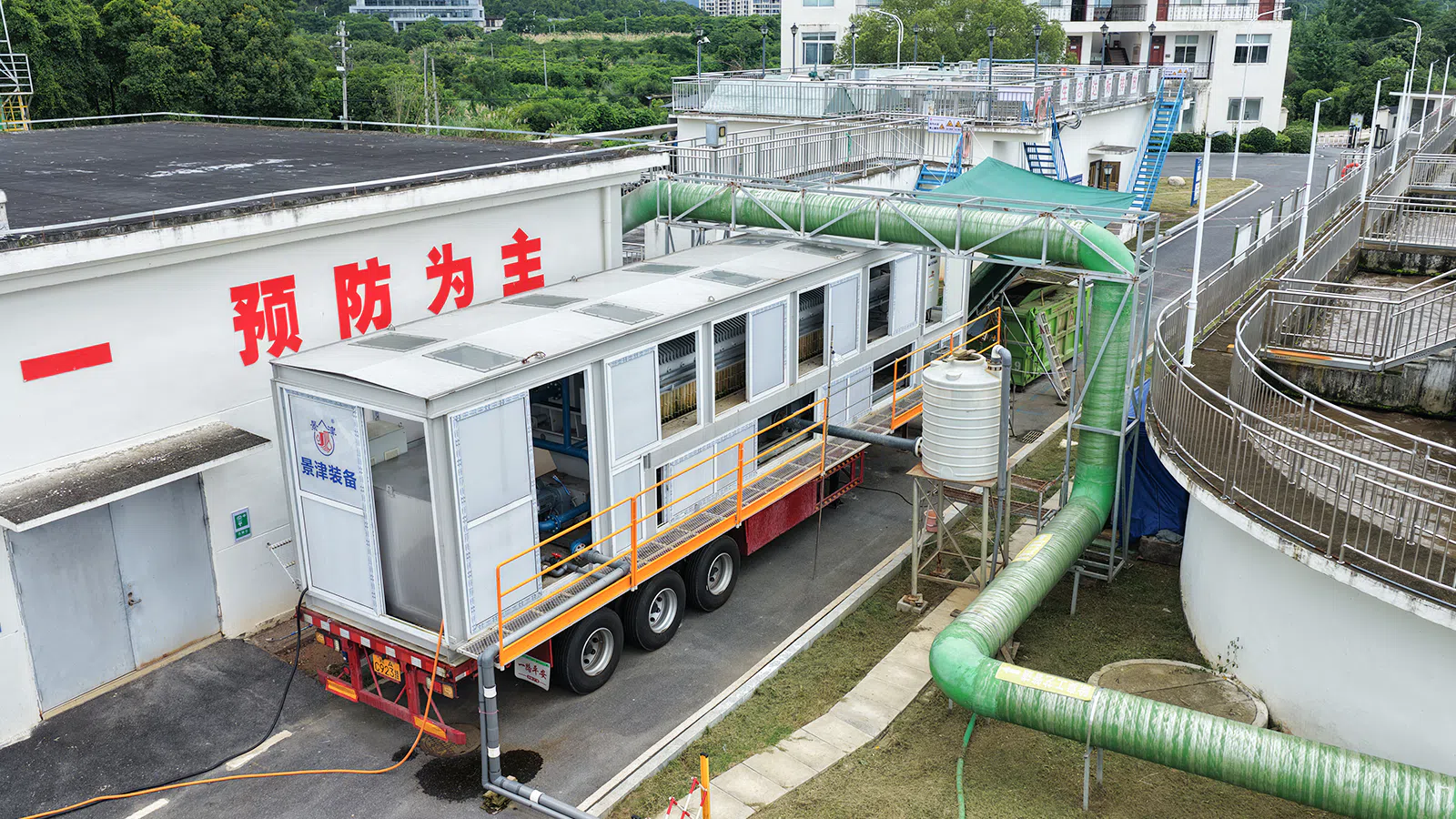
Trailer Mounted Membrane Filter Press integrates chemical dosing, mixing, feeding, membrane filtration and electrical controls on a semi-trailer chassis. With a filtration area of 375 m² and a theoretical chamber volume of 7.5 m³, it provides on-site sludge and slurry dewatering for dispersed locations, temporary projects and operations requiring relocation.
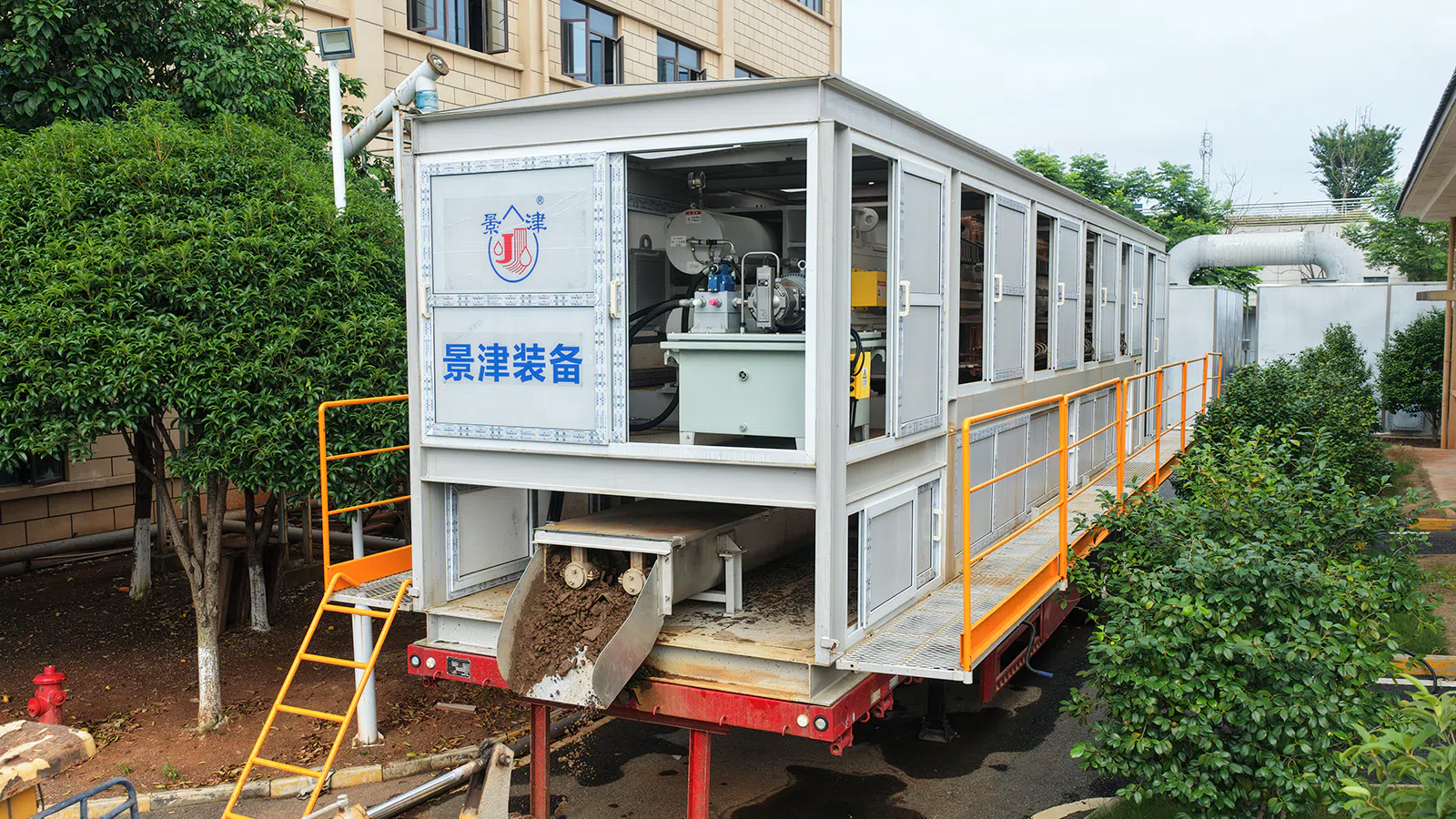
Feed is dosed and mixed before entering the press. Filtration forms the cake, followed by membrane squeezing to remove additional liquid. Automatic plate shifting releases the cake, which is carried to the collection point by a belt conveyor.
This mobile sludge dewatering system includes support legs and a folding work platform. It can be deployed without a permanent process building, provided the site has suitable ground support, power, feed connections and filtrate reception. Filtrate handling depends on its tested quality and the project requirements.
Technical Specifications
| Item | Specification |
|---|---|
| Filtration area | 375 m² |
| Theoretical chamber volume | 7.5 m³ |
| Overall dimensions, L×W×H | 13750×2500×2730 mm |
Operating Process
1. Dosing and Mixing
Feed enters the conditioning unit, where chemicals are added and mixed to prepare it for filtration. Chemical selection and dosage depend on the material.
2. Feed Filtration
Conditioned slurry enters the press. Liquid passes through the cloth while solids accumulate as cake inside the chambers.
3. Membrane Squeezing
The membranes compress the formed cake to remove further liquid. Squeezing conditions must suit the feed and the equipment’s operating limits.
4. Automatic Discharge and Conveying
After dewatering, the plate shifting mechanism opens the plates. Discharged cake is transferred to the collection point by the belt conveyor, with the electrical control system coordinating operation.
Site Deployment
Semi-Trailer and Folding Platform
The main process equipment relocates with the semi-trailer. The work platform folds for transport and opens on site to provide access for operation and routine inspection.
Support and Working Space
Support legs and the platform are deployed according to the installation requirements. The site must accommodate equipment loads, access, cake collection and maintenance.
Connections and Commissioning
Connect the power supply, feed and filtrate reception arrangements before operation. Confirm the conveyor discharge position, then adjust dosing, filtration and squeezing conditions using the actual feed.
Applications
Municipal and Environmental Projects
Applications include municipal pipe-cleaning sludge, river and lake sediments, pump station sludge and emergency sludge handling. The unit can be positioned near the material source or collection point.
Construction Slurries
Used for piling, shield tunnelling and foundation excavation slurries to support on-site slurry reduction and solids handling.
Tailings and Coal Slime
Used to dewater tailings slurry and coal preparation plant slime before downstream storage, transport or disposal.
Industrial Sludge
Applications include sludge from chemical, electroplating, papermaking and textile dyeing operations. Conditioning and filtration requirements depend on the feed.
Other Suspended Slurries
Other applications include food waste digestate solids, aquaculture sludge and stone processing slurry.