Product Overview
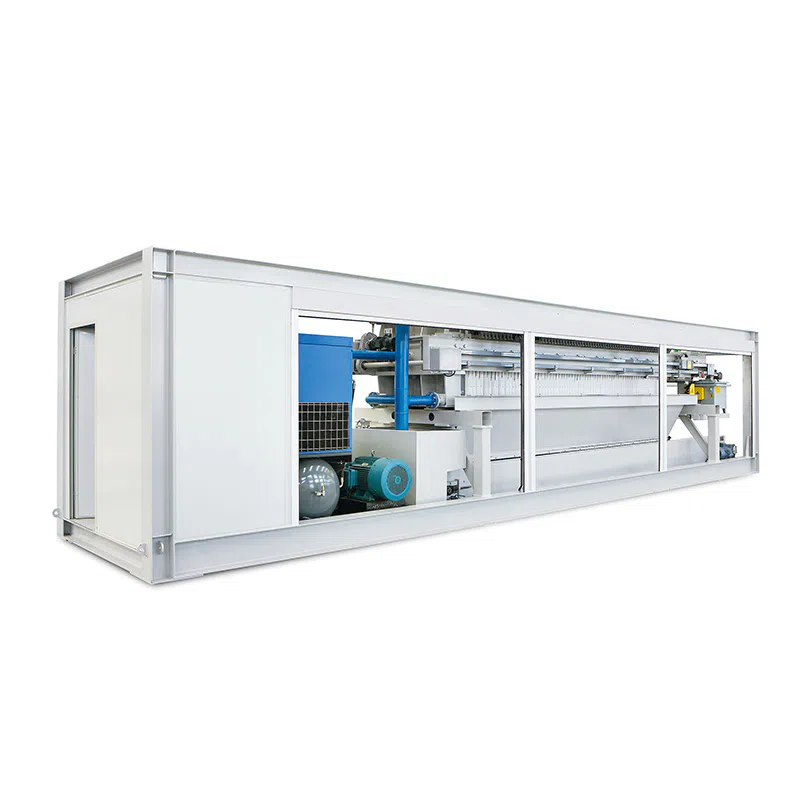
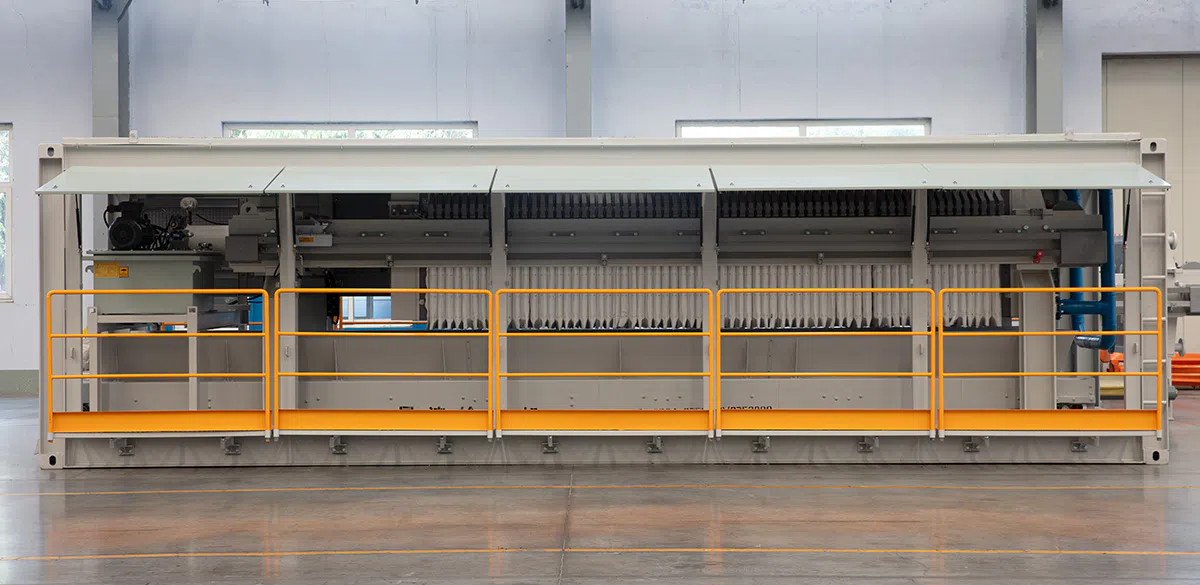
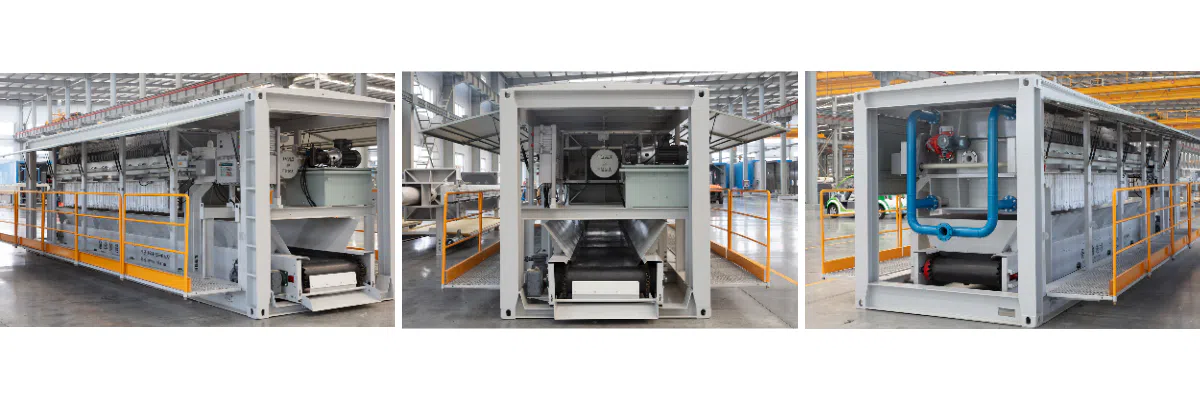
The Mobile Filter Press is an integrated solid-liquid separation system designed for filtration operations requiring equipment mobility and flexible site installation. By assembling the filter press and its supporting equipment on a transportable frame, the system can be moved between operating locations by vehicle, making it suitable for petroleum sludge treatment, hazardous waste processing, and wastewater treatment applications.
Unlike conventional filtration installations that rely on separately arranged equipment at a fixed site, this mobile system brings the main filtration components together in a common structural assembly. Depending on the specified configuration, the unit can perform filtration, cake squeezing, and solids discharge within an integrated operating arrangement.
At the processing site, the equipment may be operated on a suitable transport vehicle or installed on a separate support frame. This flexibility allows the system to be considered for temporary treatment projects, geographically dispersed operations, and applications where filtration equipment needs to be relocated.
The available filtration area ranges from 10 to 250 m², with the final equipment arrangement determined by the feed material, processing requirements, and transportation limitations. Before operation, the installation must be checked for structural stability, service connections, and appropriate safety conditions.
Technical Specifications
| Parameter | Specification |
|---|---|
| Equipment Type | Mobile Filter Press |
| Filtration Area | 10–250 m² |
| Structural Arrangement | Integrated Transportable Frame |
| Main Equipment | Filter Press and Supporting Equipment |
| Main Operations | Filtration, Cake Squeezing, and Solids Discharge |
| Transportation | Relocation by Suitable Vehicle |
| Installation Options | Vehicle-Mounted or Separate Support Frame |
| Configuration Selection | Based on Filtration Requirements and Transportation Constraints |
On-Site Deployment
1. Transportation Planning
Before relocation, the equipment's overall dimensions, total weight, center of gravity, and vehicle load capacity should be reviewed. Transportation arrangements must comply with applicable road requirements.
2. Equipment Positioning
Upon arrival, the unit can be installed on a suitable vehicle or transferred to a supporting frame. Secure mounting and structural stability must be verified before operation.
3. Utility and Process Connections
Feed lines, filtrate outlets, power supplies, and any required auxiliary services should be connected according to the selected equipment configuration.
4. Preparation for Filtration
Once installation, piping, and safety checks are complete, the appropriate operating conditions can be established for the material and the intended filtration process.
Applications
1. Petroleum Sludge Treatment
Suitable for solid-liquid separation of oily sludge generated during petroleum production and related treatment operations. The mobile arrangement can be considered for projects requiring filtration at different processing locations, subject to sludge characteristics and site conditions.
2. Hazardous Waste Processing
Can be evaluated for solid-liquid separation duties involving hazardous waste at appropriately equipped and authorized treatment sites. Equipment materials, protective measures, and operating procedures must be selected according to the waste characteristics and applicable regulations.
3. Industrial and Municipal Wastewater Treatment
Applicable to selected sludge dewatering operations in industrial and municipal wastewater treatment. The equipment can be relocated between treatment locations, with actual filtration performance determined by sludge properties, operating conditions, and the selected configuration.
Frequently Asked Questions
Q1: Must the Mobile Filter Press remain mounted on a vehicle during operation?
Not necessarily. Depending on the project design, it can operate on a suitable vehicle or be installed on a separate support frame. The mounting arrangement must meet the applicable structural and safety requirements.
Q2: Does a filtration area of 10–250 m² indicate hourly throughput?
No. Filtration area describes the available filtering surface, not the amount of material processed per hour. Actual throughput depends on the feed properties, filtration behavior, and operating cycle.
Q3: Can the equipment begin filtering immediately after delivery to the site?
The integrated arrangement can reduce site installation work, but appropriate mounting, piping connections, utility supplies, and safety checks are still required before operation.
Q4: Is cake squeezing included in every configuration?
The source identifies squeezing as one of the available functions but does not specify the mechanism used in each configuration. The required components and scope of supply should be confirmed during equipment selection.