
Product Overview
The Titanium Dioxide Leaf Filter is designed for solid-liquid separation and washing of metatitanic acid slurry in the sulfate-process production of rutile titanium dioxide. At this stage of pigment manufacturing, filtration separates the solids from the process liquor, while subsequent cake washing prepares the material for further processing. The formation of a consistent filter cake is therefore an important consideration in achieving uniform washing results.
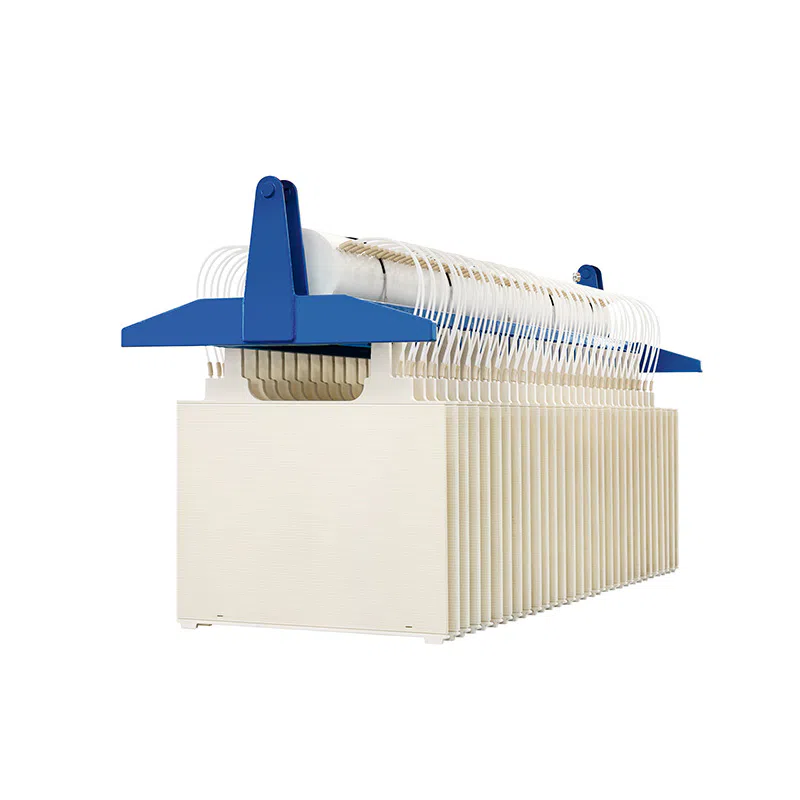
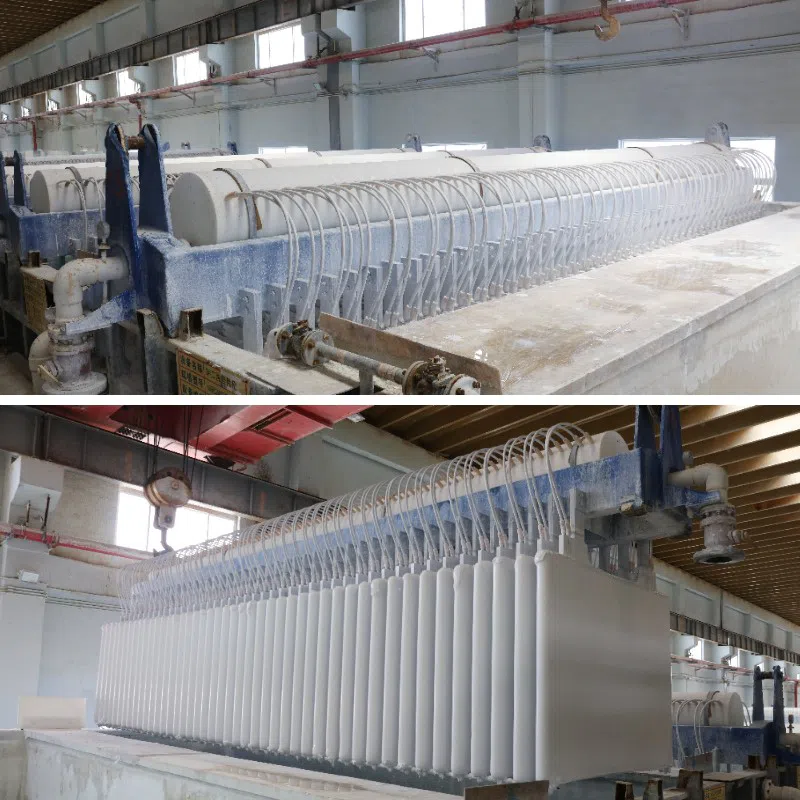
This industrial leaf filter features filter elements with consistent thickness, helping the retained solids form a more even cake layer across the filtration surfaces. By reducing variations in cake buildup, the equipment supports more uniform washing and can shorten the time required for this process. These characteristics are particularly relevant to titanium dioxide production, where consistency between filtration and washing operations is important.
The filter leaf section measures 2,100 × 1,600 mm, and the available filtration area ranges from 200 to 360 m². The supporting frame can be customized to meet project requirements. Beyond titanium dioxide processing, the equipment is also suitable for filtration and washing of iron phosphate materials, subject to the characteristics of the slurry and the required operating conditions.
Technical Specifications
| Parameter | Specification |
|---|---|
| Equipment Type | Leaf Filter |
| Filter Leaf Section Dimensions | 2,100 × 1,600 mm |
| Filtration Area | 200–360 m² |
| Frame Configuration | Customizable to Project Requirements |
| Main Materials | Metatitanic Acid Slurry, Iron Phosphate, and Related Materials |
| Main Processes | Solid-Liquid Separation and Cake Washing |
Product Functions
1. Metatitanic Acid Slurry Filtration
Separates solids from the liquid phase of metatitanic acid slurry during titanium dioxide production, preparing the retained material for washing.
2. Filter Cake Washing
Provides a washing stage for the formed filter cake as part of the titanium dioxide production process.
3. Control of Cake Formation
The uniform thickness of the filter leaves helps limit variations in cake buildup across the filtration surfaces, supporting more consistent washing conditions.
Applications
1. Sulfate-Process Titanium Dioxide Production
Primarily used for metatitanic acid filtration and washing in the production of rutile titanium dioxide via the sulfate process. The equipment supports the separation and washing operations required before further material processing.
2. Iron Phosphate Processing
Can be applied to filtration and washing operations involving iron phosphate materials. Equipment suitability and configuration should be determined by the slurry characteristics, required filtration area, and washing objectives.
Configuration and Selection
1. Filtration Area Selection
The equipment is available with filtration areas from 200 to 360 m². The appropriate configuration should be determined according to the required filtration capacity and actual process conditions.
2. Frame Customization
The supporting frame can be tailored to project requirements, with its final dimensions and arrangement coordinated with the installation site.
3. Material and Washing Requirements
Equipment selection should account for slurry properties, filter cake formation, and the required washing result. These factors help determine the suitability of the filter for the intended process.


