
Product Overview
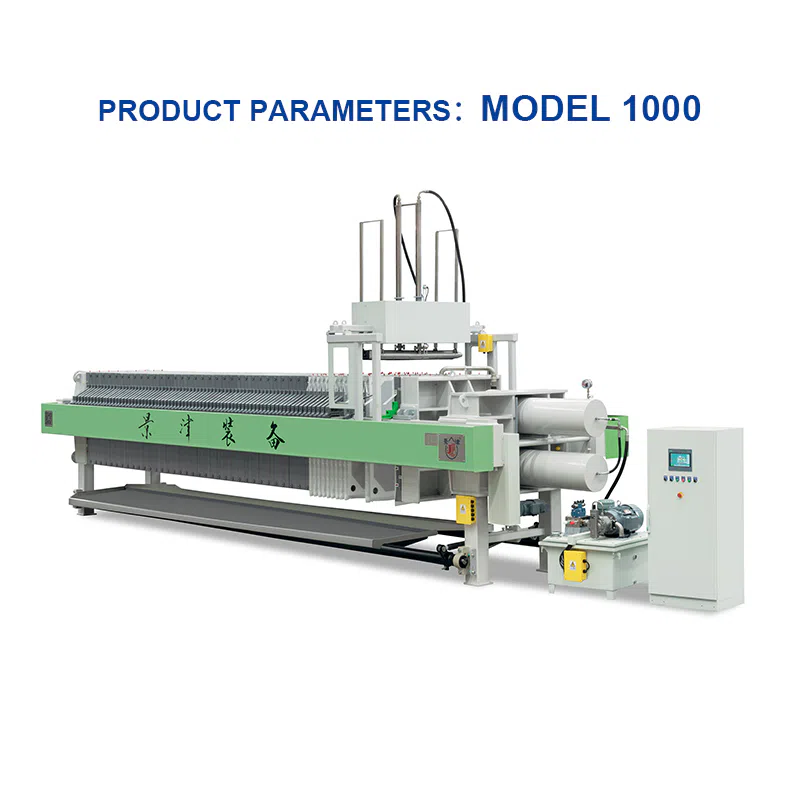
The 1000 Automatic Cloth Washing Filter Press brings routine fabric cleaning into the machine's mechanical operating arrangement. Intended for solid-liquid separation duties where cloth condition and automated operation are important, it combines the functions of a conventional filter press with an integrated washing assembly.
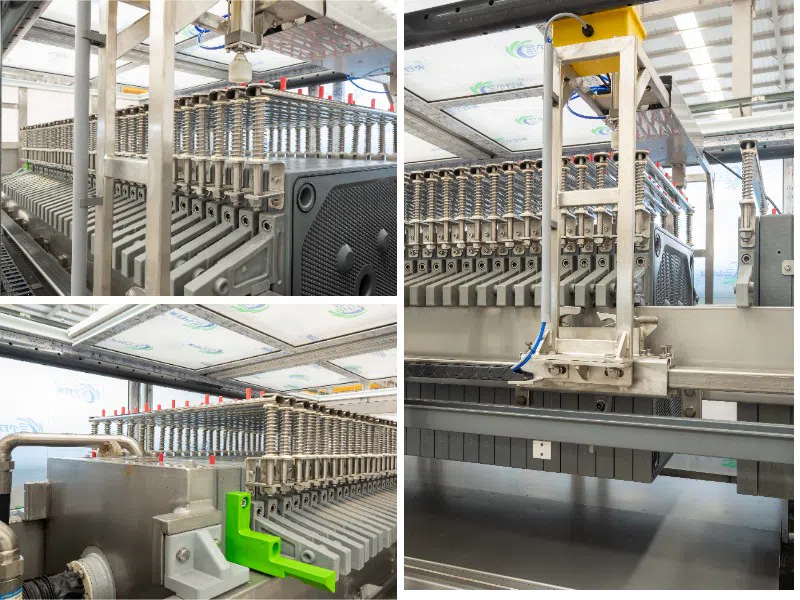
At the start of a programmed cleaning operation, the plate shifting trolley connects to the washing unit and drives its movable frame. High-pressure nozzles and brushes act on the filter cloths at timed intervals, allowing deposits to be removed in a controlled sequence. The purpose is to manage surface fouling before it contributes to restricted liquid passage and extended filtration periods.
When assessing the 1000 model, attention should be given to the material's tendency to adhere to the cloth, the required cleaning routine, and the available equipment layout. Actual washing results and maintenance intervals depend on the operating conditions.
Equipment Structure
Filter Press Assembly
The equipment follows a conventional filter press arrangement supplemented by a cloth washing mechanism.
Plate Shifting Trolley
During cleaning, the trolley engages the washing unit and provides the movement needed to position the frame.
Washing Frame
The frame carries the spray nozzles and brushes as the cleaning assembly moves between successive cloth positions.
Operating Coordination
Filtration and Washing Functions
During filtration, the cloth acts as the separation medium. When the washing procedure is initiated, the cleaning assembly addresses deposits remaining on its surface.
Movement and Positioning
The motion of the plate shifting trolley determines the travel of the washing frame, bringing the spray and brush components to successive cloth positions.
Washing Conditions
Cleaning settings should reflect the cloth material, the nature of the retained deposits, and the equipment configuration. Model identification alone does not establish a suitable cleaning interval or guarantee a particular result.
Frequently Asked Questions
Q1: Does the 1000 model require each cloth to be washed manually?
The integrated washing mechanism allows the trolley and washing frame to clean the cloths in sequence once the program is started, reducing the need for individual manual washing.
Q2: Does high-pressure spraying completely prevent cloth blockage?
No. Washing helps remove surface deposits, but fouling still depends on the feed material, cloth condition, and cleaning effectiveness. Complete prevention of blockage should not be assumed.
Application Requirements
The 1000 model may be considered for solid-liquid separation processes where integrated cloth washing is required, particularly when deposits on the filtration medium influence operating consistency.
Evaluation should include feed characteristics, cloth material, available washing water, and equipment installation requirements.


