Product Overview
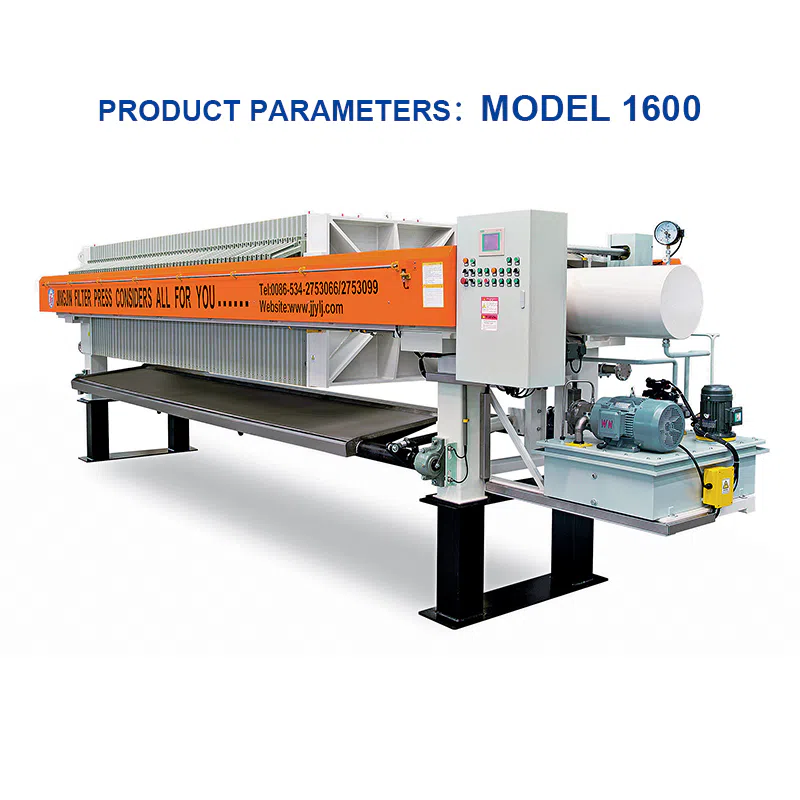
The 1600 Programmable Filter Press is a batch-operated pressure filtration machine designed for integration into industrial solid-liquid separation lines. As part of the programmable automatic filter press range, it combines mechanical, hydraulic, and electrical functions under a PLC and touchscreen-based control arrangement.
In a production plant, the filter press normally interfaces with feeding equipment, filtrate collection, and downstream cake handling systems. The 1600 model can be configured with appropriate auxiliaries, while the relationship between the main machine and surrounding equipment is defined during engineering design. Variable-frequency drives are commonly used for automatic plate shifting in the series, subject to the selected specification.
Manual and automatic operating modes support different production and service needs. Remote monitoring, audible and visual fault alarms, operating interlocks, and auxiliary units such as cloth washing or cake shaking can be included according to the project scope.
Neither filtration area nor hourly throughput can be established from the 1600 model designation alone. Plate configuration, feed characteristics, installation requirements, and required process functions must be reviewed before the equipment is specified.
System Integration
1. Feed Interface
Confirm connections with feeding equipment, including pressure requirements, feeding sequence, and any necessary operating coordination.
2. Filtrate and Drip Management
Review filtrate routing and collection arrangements to determine the suitability of drip trays and discharge connections.
3. Downstream Cake Handling
Define the discharge area and its relationship with conveyors, collection units, or temporary storage equipment.
4. Control Interface Scope
External interlocks, communication methods, and monitoring data points should be specified rather than assumed to be universally included.
Operation & Maintenance
Daily operation should follow the approved feeding, filtration, depressurization, and discharge sequence. On machines equipped with automatic plate shifting, relevant moving parts, drive components, and interlocks should be checked according to the installed mechanism.
Cloth care, plate inspection, and hydraulic system maintenance should form part of the plant maintenance program. Where tilting drip trays, cake shaking, or washing assemblies are supplied, their service access and maintenance requirements must be addressed separately.
Service intervals, lubrication practices, and replacement criteria should follow the equipment manual and actual operating conditions; the available source does not establish a universal maintenance schedule.
Applications
1. Mining and Metallurgy
Can be evaluated for mineral and metallurgical slurry filtration with attention to particle properties and cake requirements.
2. Industrial Wastewater
Relevant to selected wastewater sludge dewatering duties, subject to material filterability, compatibility, and cake discharge behavior.
3. Chemical Manufacturing
Provides a batch pressure filtration option for chemical slurries when material compatibility and auxiliary equipment are appropriately specified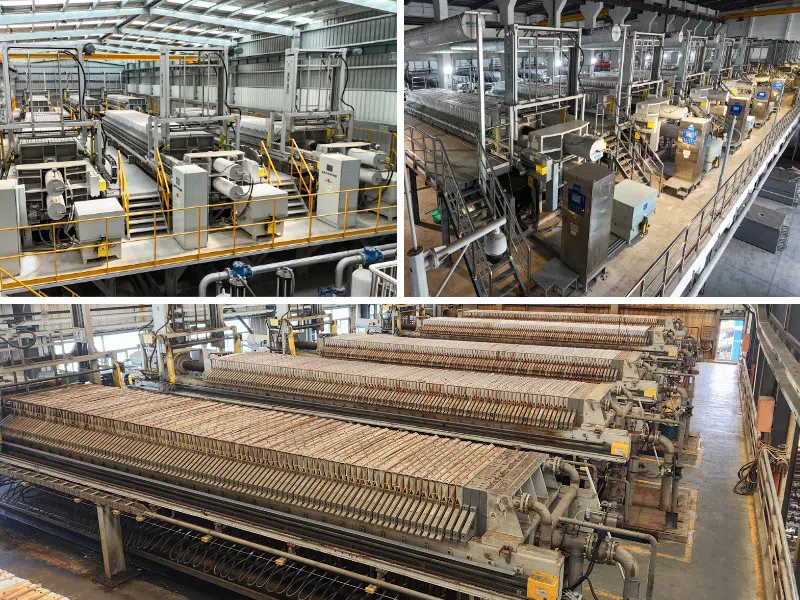
Engineering Checklist
1. Capacity and Filtration Area
Derive the required filtration area from production targets and feed testing; model size alone does not establish throughput.
2. Automation Package
Confirm requirements for operating modes, alarms, remote monitoring, and plate shifting drive selection.
3. Auxiliary Scope
Check whether cake shaking, cloth washing, and tilting drip trays are included in the supplied configuration.
4. Installation and Safety
Review foundations, layout, service access, and interlock requirements during final engineering.


