
Product Overview
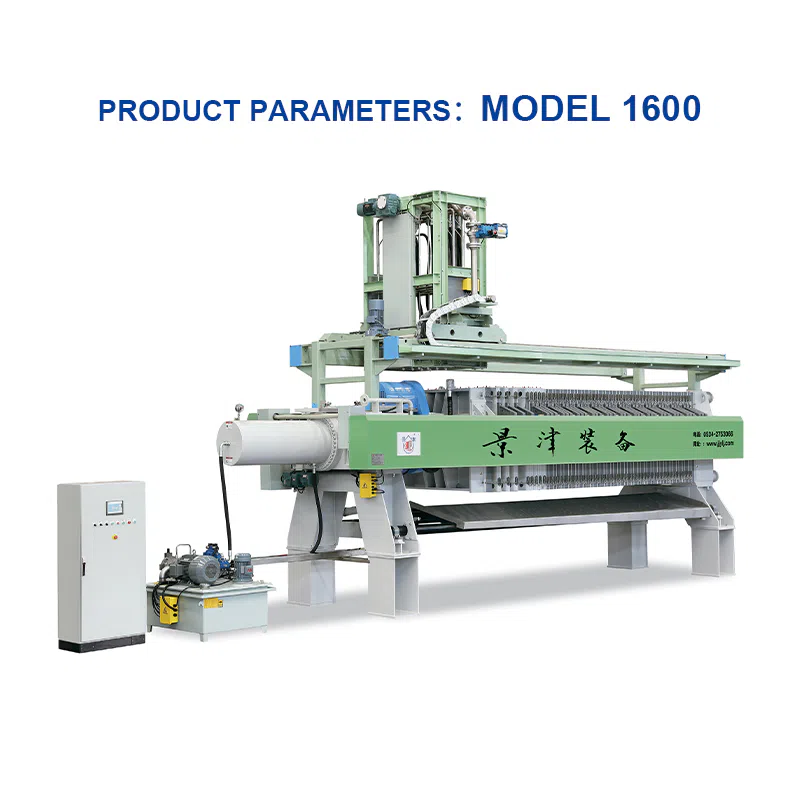
Sludge Press Filters are offered in model 1600 with 200–400 m² of filtration area for titanium dioxide production wastewater and coal washing slurries. Project evaluation connects the incoming feed with the required cake condition and downstream handling before filtration and squeezing conditions are selected.
The automatic locking device works with the frame, filtration assembly, hydraulics, discharge device and electrical controls. A geared motor advances and retracts the locking nut. Its mechanical restraint limits piston rod retraction under reaction loads or a drop in cylinder pressure.
Filtration forms the cake, and squeezing removes further retained liquid. Feed concentration, particle characteristics and process conditions influence the discharged material. Cake moisture, filtration time, filtrate condition and discharge behaviour should therefore be assessed together when planning operation.
In coal washing and titanium dioxide wastewater treatment, the destination of the dewatered material defines the required cake condition. The 1600 press is specified around that requirement, linking filtration area, media and discharge reception in a connected approach from feed entry to cake removal.
Configuration Data
The 200–400 m² area configuration can be selected around solids loading, material properties and operating cycles. Representative trials relate filtration time and cake condition to planned operating hours, helping establish an arrangement that fits the production schedule.
The filtration assembly, frame and clamping components work together to fulfil the defined duty. Separating feed conditions, solids loading and output requirements in the specification helps relate filtration area to equipment connections, installation position and the operating schedule.
| Item | Specification |
| Model | 1600 |
| Filtration area | 200–400 m² |
| Locking device | Automatic locking nut |
| Nut drive | Geared motor |
| Applications | Titanium dioxide production wastewater; coal washing |
Dewatering Evaluation
Use representative feed
Trial samples should reflect the planned feed source and its variation. Recording solids content and particle characteristics helps explain filtration time, cake formation and changes in the filtrate, rather than relying on a final moisture measurement alone.
Assess squeezing together with discharge
Evaluation should include liquid removal, cake moisture and discharge behaviour. One result alone may not show whether the complete cycle fits production needs. Selected conditions must balance the required cake condition with the equipment operating limits.
Evaluate each application separately
Titanium dioxide production wastewater and coal washing slurry come from different processes. Results from one should not be treated as a validated recipe for the other. Wetted materials, filtration media and operating records need to reflect each actual feed.
Evaluation records can also track variation between batches of the same feed. Recording incoming material alongside drainage, cake formation and discharge results helps identify changes associated with the feed and areas that call for closer inspection of the medium or machine condition.
Operating Checks and Maintenance
Observe locking and clamping
Routine observation covers nut travel, clamping position and hydraulic system condition. Relating forward and reverse nut movement to plate pack condition and operating records helps track machine performance and plan the appropriate checks and maintenance.
Track filtration media condition
Cloth condition and fitting affect filtrate, cake formation and discharge. The locations of deposits, wear or damage can help distinguish media issues from feed changes and inform cleaning or replacement planning.
Keep cycle records
Record filtration time, squeeze drainage, cake condition and abnormalities alongside the associated feed batch. If cycles lengthen or discharge changes, these records help review the feed and equipment condition before operating settings are revised.
Linking maintenance to filtration records helps address cloth deposits, fitting and changes in mechanical movement more systematically. Continued observation of filtrate and cake also preserves comparable records when process conditions are adjusted, giving later improvements a basis in actual operation.
Project Specifications
Project specifications address feeding, dewatering and material reception. Feed source and variation, required cake condition, processing requirements and operating hours define the duty. Upstream feeding and downstream cake and filtrate facilities establish how the press connects to the site.
Technical confirmation should also cover filtration media, wetted materials, permitted pressures, coordination of the nut and hydraulics, and electrical interfaces. Each pressure specification needs a defined point of application and unit so it can be checked against the press and supporting equipment.
Acceptance uses an agreed representative feed and evaluation method to connect filtration and squeezing performance to production requirements. Layout, filtration media and operating arrangements follow the same process objectives, providing a consistent basis for monitoring results after installation.
Filtration media selection considers solids retention, drainage and cake release from the cloth. Observing these functions with the actual slurry helps match the medium to operating conditions and to the project requirements for separation and downstream material handling.


