

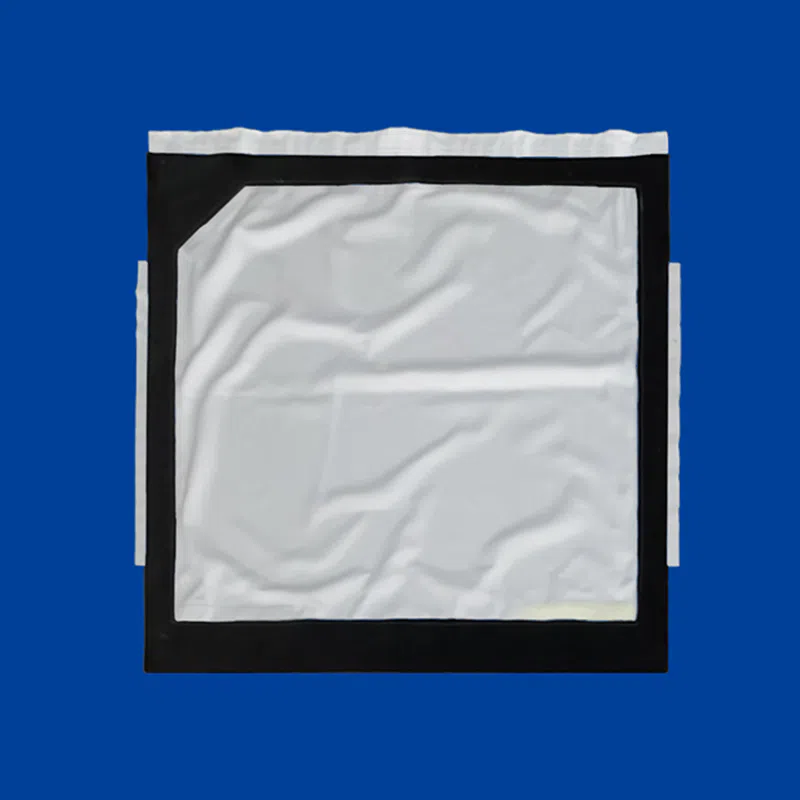
Product Overview
Oil Filter Cloth JJS002 is used for chemical oils and fats processing. Made from polyamide, or nylon, it retains solids while the liquid passes through to the next stage.
The oil filter fabric is 0.35 mm thick, with an air permeability of 400 L/(m²·s). Viscosity, particle distribution and solids content affect filtration behaviour, so selection starts with the particular material.
When choosing filter cloth for oil, observe the filtrate at startup and later in the run, along with solids discharge. Inspect the cloth after cleaning as well. Recheck nylon compatibility if the oil composition or cleaning agents change.
Technical Specifications
The 400 L/(m²·s) value describes air permeability and 0.35 mm describes thickness. Observe oil filtration under the corresponding process conditions.
| Item | Data |
| Model | JJS002 |
| Material | polyamide (nylon) |
| Air permeability | 400 L/(m²·s) |
| Thickness | 0.35 mm |
| Applications | chemical oils and fats processing |
Working Principle
A filtration pressure differential drives the oil phase through the medium while solids are retained. As solids accumulate, the cake also contributes to filtration.
Oil viscosity, cake growth and deposits affect liquid passage. Operating records should therefore include liquor condition and changes during filtration.
Applications
For solids separation in chemical oils and fats processing. Selection centres on oil composition, the particles to be retained and the intended filtrate use.
Include accompanying media in the material compatibility check, together with the liquids that contact the cloth during cleaning.
Selection Guide
Provide oil composition, viscosity, particles, solids content, temperature and cleaning medium. Equipment details should cover effective dimensions, interfaces, fastening and support.
For replacement work, compare filtrate, solids discharge and post-cleaning condition under similar feed conditions. This helps distinguish changes in the feed from changes caused by replacing the cloth.