
Product Overview
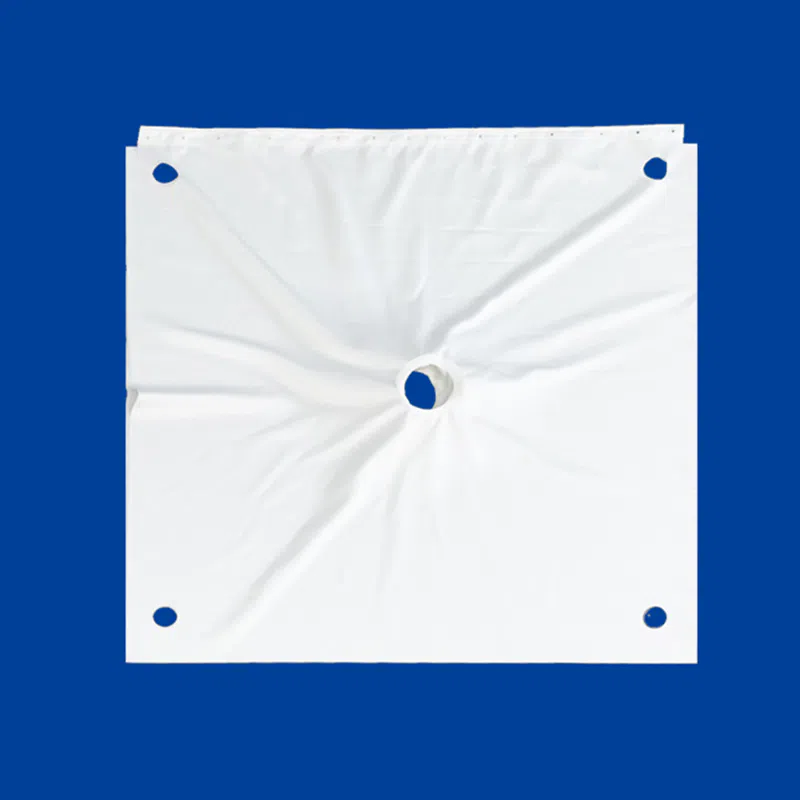
Synthetic Filter Fabric 8222 is made from polyester for dye processing. Used as an industrial filter fabric, it retains solids while liquid passes through the medium.
The filtration cloth is 1.25 mm thick, with an air permeability of 13 L/(m²·s). As solids accumulate, a cake develops on the surface and changes the resistance to flow and filtrate condition.
Dye formulations can differ in their particles and liquid composition. Check the filtrate at startup and later in the run, and note how the solids discharge. Inspect the cloth after cleaning. These observations help plan maintenance for the formulation in use.
Technical Specifications
The cloth thickness is 1.25 mm. Procurement also needs the finished dimensions and interface requirements alongside the air-permeability and thickness data.
| Item | Data |
| Model | 8222 |
| Material | polyester |
| Air permeability | 13 L/(m²·s) |
| Thickness | 1.25 mm |
| Applications | dye processing |
Applications
For separation of solids and liquid in dye processing. Identify the target solids and the next use of the filtrate when selecting the cloth.
After changing formulation, feed source or cleaning method, watch for changes in filtration and discharge. Keep service records linked to the particular material.
Filtration Evaluation
Observe initial filtrate separately from filtrate after cake formation. During trials, record solids carryover, cake development and discharge rather than relying on a single flow reading.
Also note local deposits and changes after cleaning. Comparing these observations with feed changes helps identify where a problem arises.
Installation and Maintenance
Before installation, check effective dimensions, feed interfaces and fastening edges. The cloth should fit its support without folds or local tension.
During service, inspect deposits, wear and tears. Cleaning conditions must suit polyester, dye residues and the equipment. Recheck cloth condition after cleaning before returning it to use.