Product Overview
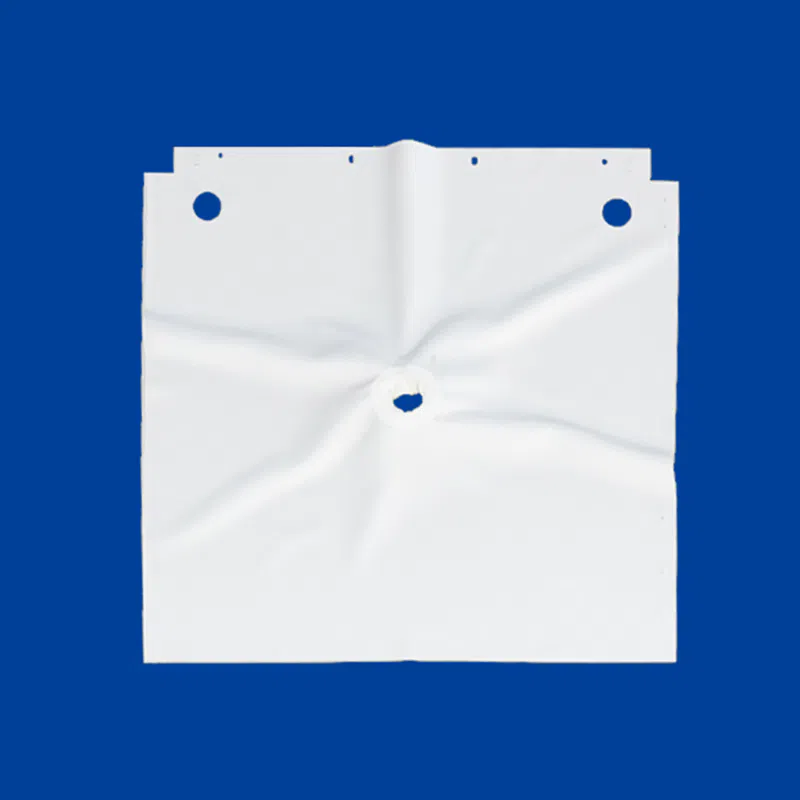
Filter Press Cloth (model 1000A) is made from polypropylene for kaolin processing and chemical processing. During pressing, liquid passes through the cloth while solids form a cake on its surface. The filter plate supports the cloth.
This industrial filter fabric has an air permeability of 20 L/(m²·s) and a thickness of 0.75 mm. Check the plate dimensions, feed openings and sealing surfaces before fitting the cloth.
Slurry details and a used sample help when choosing filter cloth for filter press applications. The sample can show where solids build up or the cloth wears. Use these observations and the cleaning method to specify the replacement.
Applications
Kaolin processing
Used for slurry filtration, with the duty set by feed particles, solids concentration and subsequent cake handling.
Chemical filtration
Used for chemical solid-liquid separation after confirming polypropylene compatibility with the liquid, equipment and process conditions.
Technical Specifications
Permeability describes airflow and thickness helps check fitting. They do not directly establish liquid capacity or a particle retention grade.
| Item | Data |
| Model | 1000A |
| Material | polypropylene |
| Air permeability | 20 L/(m²·s) |
| Thickness | 0.75 mm |
| Applications | chemical processing; kaolin processing |
Selection Guide
Provide slurry composition, particle sizes and solids concentration, plus the target filtrate and cake condition. For replacements, include plate fitting requirements or a used sample to check feed locations, seals and dimensions.
With actual feed, follow filtration from startup through cake formation rather than comparing only the initial liquid flow.
Filter Cloth Maintenance
Check damage locations
Compare deposits, wear and tears with equipment contact areas to find fitting or support problems.
Inspect after cleaning
Use a method suited to the slurry residue and polypropylene, then check surface integrity and subsequent filtration.