Product Overview
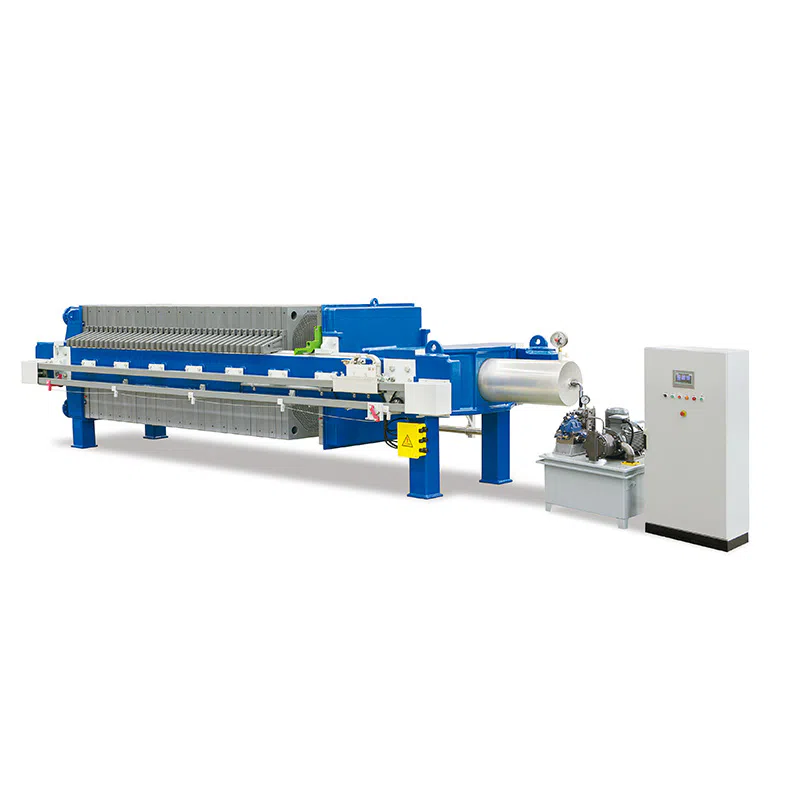
The Hot-Melt Plastic-Coated Filter Press is an industrial solid-liquid separation system designed for filtration applications where equipment corrosion is a significant operating concern. It combines conventional filter press functionality with a protective plastic coating applied to designated structural surfaces, making it suitable for consideration in chemical processing, industrial wastewater treatment, and other corrosive environments.
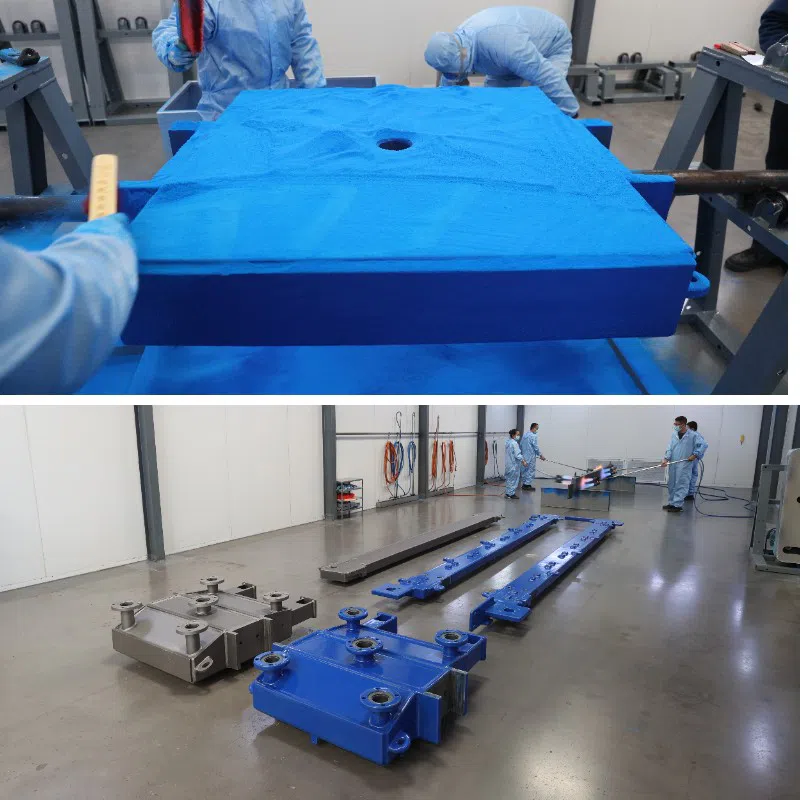
In processes involving acids, alkalis, salts, or chemically aggressive liquids, exposed metal components may be subject to corrosion caused by direct contact, splashing, or the surrounding operating environment. The hot-melt plastic coating creates a protective barrier between the treated carbon steel surfaces and external corrosive substances. This arrangement is intended to help protect the equipment structure while retaining the filtration functions required for industrial solid-liquid separation.
The product is available in multiple filter plate sizes, allowing the equipment configuration to be selected according to the required filtration area and processing conditions. Its corrosion-resistant design can be considered for chemical slurries and selected industrial sludge applications where additional structural protection is needed.
The suitability of the coating must be verified against the actual chemicals, operating temperatures, exposure conditions, and required protection coverage. Final equipment selection should therefore address both filtration performance and material compatibility.
Technical Specifications
| Parameter | Specification |
|---|---|
| Equipment Type | Hot-Melt Plastic-Coated Filter Press |
| Base Equipment | Programmable Automatic Filter Press Series |
| Common Plate Models | 630, 800, 900, 1000, 1250, 1500, 1600, 2000 |
| Additional Plate Specification | Listed as 1500 × 200 in the source; confirmation required |
| Protective Treatment | Hot-Melt Plastic Coating |
| Main Structural Substrate | Carbon Steel |
| Corrosion Protection | Plastic Barrier Between Treated Surfaces and Corrosive Media |
| Equipment Selection | Based on Filtration Area, Feed Characteristics, and Processing Requirements |
Corrosion Protection Design
1. Carbon Steel Structure Protection
The carbon steel framework provides structural support, while the hot-melt plastic coating protects designated metal surfaces from direct exposure to corrosive substances.
2. Protective Plastic Barrier
The coating forms a continuous separation layer. Its actual integrity, adhesion, and chemical resistance depend on the selected material and application process.
3. Protection of Critical Areas
Connections, edges, corners, and other potentially exposed locations should be evaluated to ensure that the specified coating coverage meets the intended service conditions.
4. Coating Condition Monitoring
Routine inspection should include checking for coating damage, separation, or other deterioration that could expose the underlying metal to corrosive media.
Applications
1. Chemical Processing
Suitable for evaluation in filtration processes involving acidic, alkaline, or salt-containing slurries. The protective coating can be specified where the chemical environment presents a corrosion risk to exposed metal structures.
2. Industrial Wastewater Treatment
Applicable to selected solid-liquid separation duties involving chemically complex or corrosive industrial wastewater and sludge. Coating compatibility should be assessed against the actual wastewater composition and operating conditions.
3. Sludge Dewatering
For sludge treatment applications where corrosive substances may contact the equipment structure, a plastic-coated filter press can provide an additional protective option. Suitability depends on the sludge properties, liquid composition, and specified coating coverage.
Selection Guide
1. Identify the Corrosive Media
Provide the chemical composition, pH, salt content, and other relevant characteristics of the feed material to assess coating compatibility.
2. Verify Operating Temperatures
The permissible temperature range depends on the plastic coating material. Both process and ambient conditions should be considered before confirming its suitability.
3. Define the Required Protection Coverage
Confirm which equipment surfaces will receive the hot-melt plastic coating. Components exposed to process liquids should also be reviewed to determine whether separate protection is necessary.
4. Select the Filtration Configuration
Once corrosion protection requirements have been established, determine the appropriate filter plate size and equipment configuration according to filtration area, material characteristics, and processing requirements.
5. Review Operating and Maintenance Conditions
Consider cleaning methods, inspection practices, and potential mechanical wear when establishing maintenance requirements for the protective coating.