
Product Overview
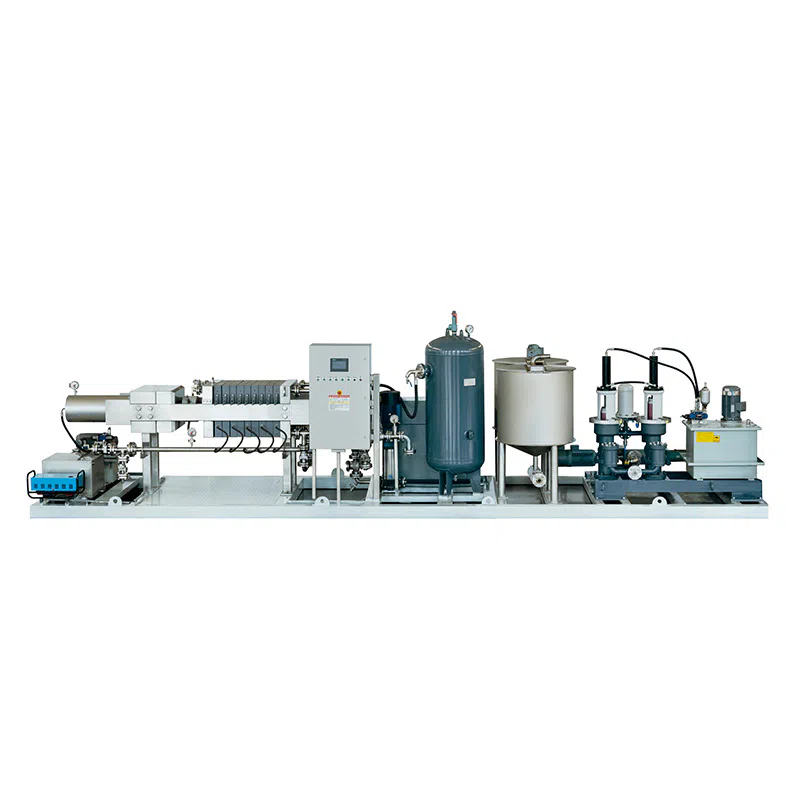
The Filter Press Test Rig is an integrated testing system developed for solid-liquid separation research, material filtration assessment, and filter press selection. Built around recessed chamber or membrane filter press configurations, it can incorporate feeding, cake washing, membrane squeezing, and cake air-blowing functions to support the evaluation of filtration processes before full-scale equipment is selected.
Industrial slurries vary considerably in particle composition, solids concentration, and dewatering behavior. As a result, theoretical calculations alone may not adequately represent the filtration performance of a particular material. This pilot filter press system enables users to conduct trials under different process conditions, examine filter cake formation, and assess the effects of subsequent washing or dewatering stages.
The equipment is available in 250, 300, 500, 630, 800, and 1000 model sizes. Configurations can be selected according to filtration area, pressure requirements, and the intended test program. A variable-speed agitated slurry preparation tank helps maintain material uniformity during testing, particularly when working with concentrated slurries that are prone to settling.
By bringing several testing operations into one system, the equipment provides a practical basis for process development, filtration trials, and the technical evaluation of industrial filter press applications.
Technical Specifications
| Parameter | Specification |
|---|---|
| Equipment Type | Filter Press Test Rig |
| Available Plate Models | 250, 300, 500, 630, 800, 1000 |
| Test Press Configurations | Recessed Chamber / Membrane Filter Press |
| Selection Criteria | Filtration Area, Plate Size, Pressure Rating, Test Functions |
| Slurry Preparation | Variable-Speed Agitated Slurry Tank |
| Washing Function | Filter Cake Washing Tests |
| Squeezing Function | Membrane Squeezing Tests |
| Air-Blowing Function | Compressed-Air Cake Dewatering Tests |
| Model 630 Squeezing Options | Listed as 40 kg and 60 kg in the source; unit and technical designation require confirmation |
Testing Process
1. Slurry Preparation
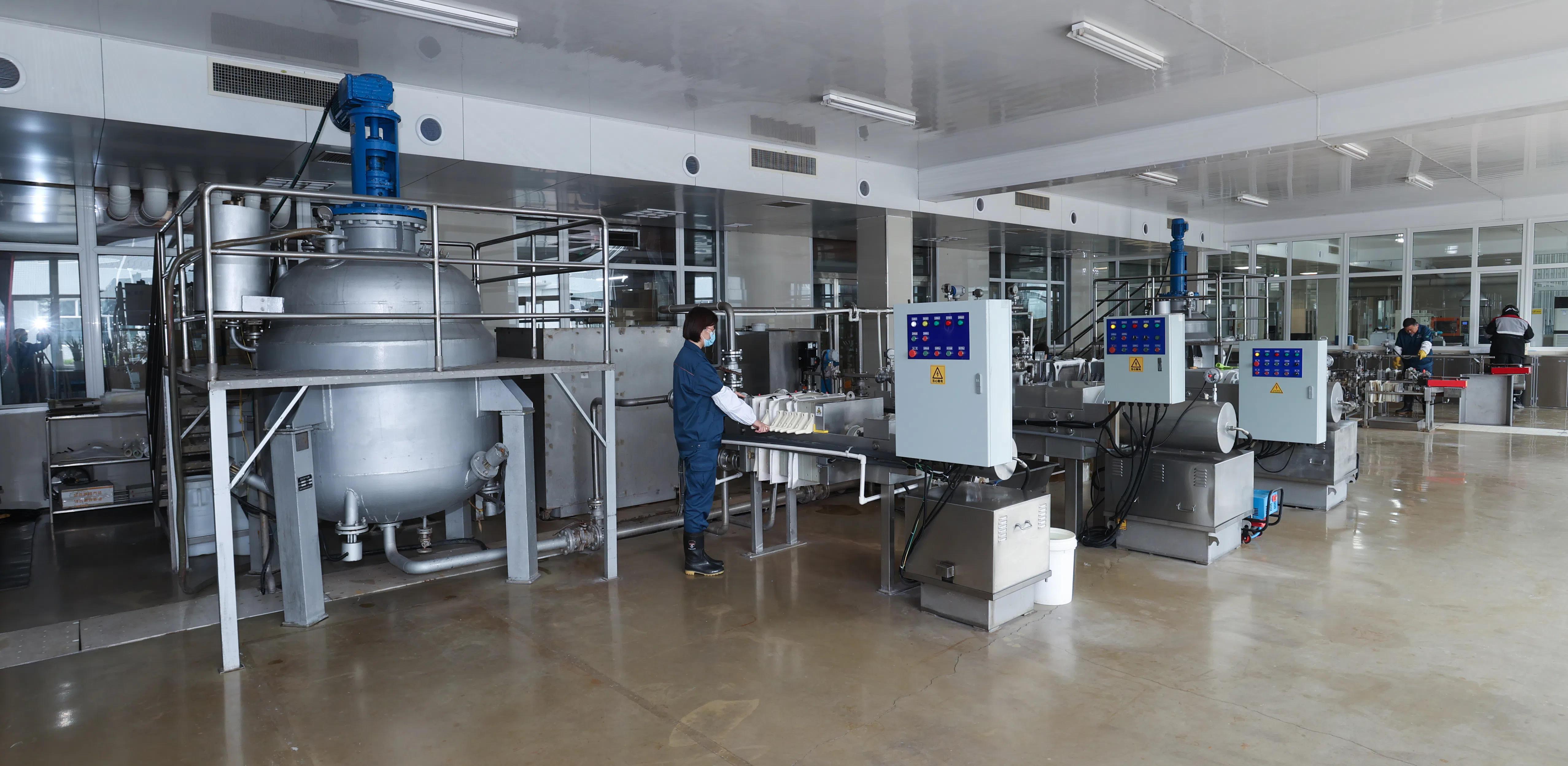
The test material is prepared in the agitated slurry tank. Mixing speed can be adjusted to help maintain a consistent suspension and limit particle settling.
2. Feed Filtration
The prepared slurry is introduced into the test press under the selected operating conditions. Filtrate discharge and cake formation can then be observed throughout the filtration stage.
3. Filter Cake Washing
Where required, washing trials are performed to examine how the retained material responds to different washing conditions and to support process development.
4. Membrane Squeezing
For configurations equipped with membrane squeezing, additional pressure is applied to the formed cake to assess its moisture condition after mechanical dewatering.
5. Air Blowing and Cake Discharge
Compressed-air through-flow tests can be conducted according to the test program. The press is then opened, and the discharged cake can be inspected and sampled for further evaluation.
Selection Guide
1. Define the Testing Objectives
Before selecting a configuration, determine whether the equipment will be used for filtration assessment, cake washing studies, dewatering optimization, or verification of a proposed production filter press.
2. Establish the Test Scale
Consider the available sample volume, required filtration area, and experimental conditions when choosing from the 250 to 1000 model range.
3. Specify the Process Modules
Membrane squeezing should be included when post-squeeze cake moisture needs to be evaluated. Compressed-air equipment is required for air-blowing trials. The final combination depends on the intended test program.
4. Identify the Evaluation Criteria
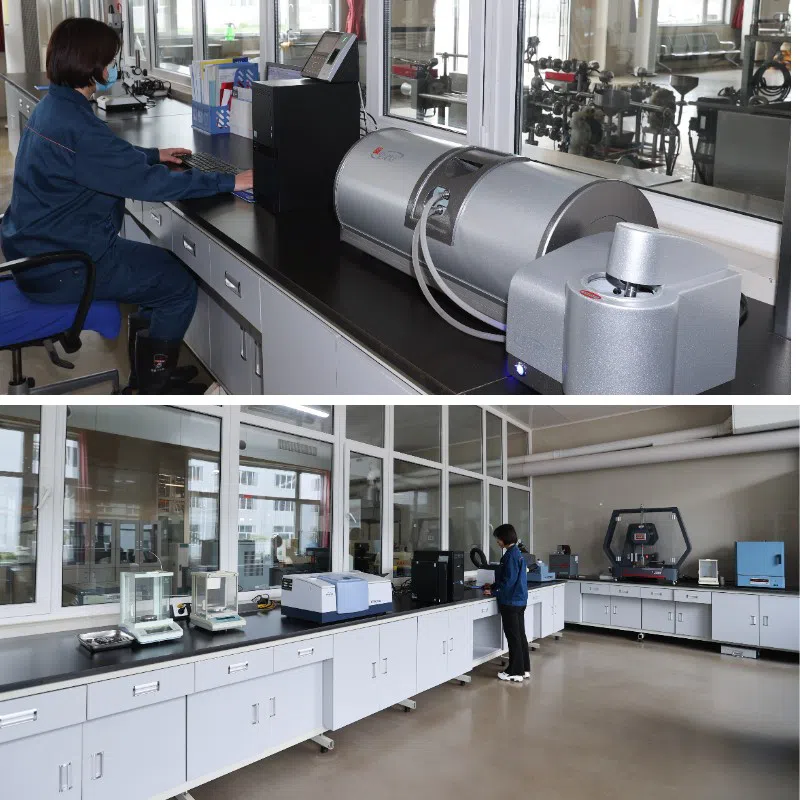
Relevant results may include filtration time, filtrate condition, cake formation, residual cake moisture, and the effect of air blowing. The measurement and recording methods should be defined in the project test plan.
Frequently Asked Questions
Q1: Why is material testing important before purchasing a production filter press?
Filtration behavior varies between materials. Practical trials help establish cake formation characteristics, filtration time, and dewatering performance, providing a more reliable basis for equipment selection and process design.
Q2: Can a pilot test directly determine full-scale production capacity?
Pilot test results provide useful inputs for estimating equipment capacity and selecting a production system. However, scale differences and actual operating conditions must still be considered during engineering design.
Q3: Can the test rig determine final filter cake moisture content?
Cake moisture can be evaluated through appropriate squeezing or air-blowing trials followed by sample testing. Automatic moisture measurement and data recording capabilities depend on the specific equipment configuration.
Q4: Are washing, squeezing, and air blowing included with every model?
The system can be configured with different testing functions according to project requirements. The available functions should be confirmed for the selected model rather than assumed to be standard across the entire range.


